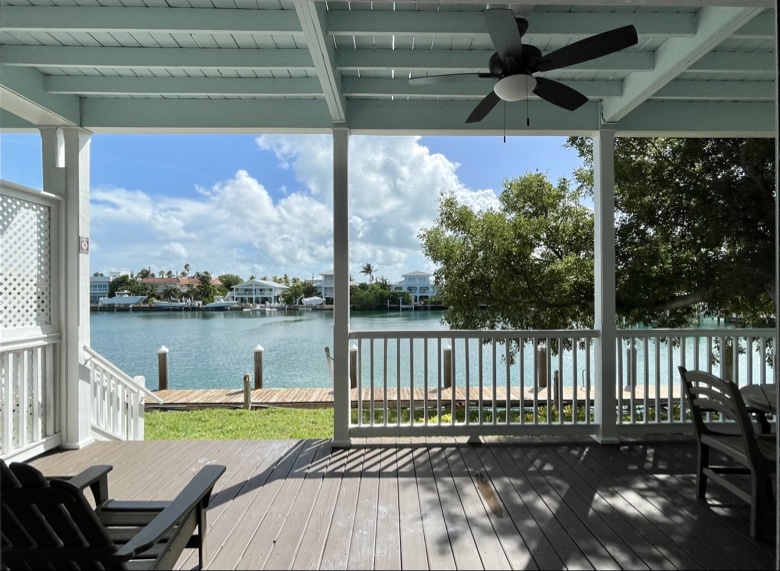
Buying a Boating Home in the Florida Keys: Dockage Questions That Decide the Deal
Most people shop for a waterfront home the same way they shop for any other home. They count the bedrooms, look at the kitchen, and step outside to check the view. Then they walk out back, see a dock, and think, good, the boat fits.
I sell waterfront homes in the Upper Keys, and I hold a captain’s license. From both sides of that dock, I can tell you the boat part is where deals are won and lost. A house can be perfect and still be wrong for your boat. Here is what I look at before I let a buyer fall in love with a place.
Start with your boat, not the house.
Before we look at a single listing, I want four numbers: how long your boat is, how wide, how much water it draws, and how tall it sits above the waterline. If you plan to move up to a bigger boat in a couple of years, we shop for that boat instead. The house you buy should fit the boat you are growing into, not just the one sitting behind your house today.
Depth is about the whole route, not just the dock.
Listings down here talk about control depth. That is the shallowest point between the dock and open water, and it is the only depth number that matters. A dock with eight feet of water behind the house does you no good if the mouth of the canal only gives you four at low tide. Plenty of boats have been bought for houses where they can only come and go near high tide. Ask for the control depth, and ask what it is at low water, not on a good day.
Dock length matters, and so does the lift question.
Your dock should give you room for the whole boat, with space to tie up safely. Then there is the lift. A lift is rated by weight, not by length. A lift rated at ten thousand pounds does not care that your boat is thirty two feet long if it weighs twelve thousand loaded with fuel and gear. And some owners need to tie up dockside with no lift at all, which is a fair ask, but it has to be asked before you write an offer, not after. If a listing is vague about the dock, that vagueness is your answer until somebody proves otherwise.
Bridges set a hard ceiling.
Any fixed bridge between the dock and open water decides how tall a boat can live there. Towers, outriggers, and antennas all count. Measure your air draft honestly and compare it to the bridge clearance at high tide. Nobody likes finding out on moving day that the boat they already own cannot get under the bridge behind their new house. It happens more than you would think.
Look at the canal itself.
A long boat in a narrow canal can be a daily fight, especially with wind. Check the turning room at the dock and how far you have to back down before you can turn around. Dead end canals deserve a second look too. The water at the far end of a canal moves less, and it shows. If you can, visit the property by water before you buy it. You will learn more in ten minutes on the canal than in an hour of looking at photos.
Seawalls and docks are big ticket items.
In the Keys, a tired seawall is not a cosmetic issue. A cracked cap or a wall starting to lean can turn into a serious repair bill, and it is the kind of thing sellers hope you will not look at too closely. I look anyway. Same with the dock itself and whether the work on it was permitted. A cheap waterfront home with a failing seawall is not cheap.
Ocean side or bay side, and how long to open water.
Think about how you actually use the boat. A short ride to open water on the ocean side is a different life than a long idle through no wake zones on the bay side. Neither one is wrong. But if you fish offshore most weekends, a forty minute idle each way will wear on you, and it should factor into which streets you shop on.
Insurance decides whether the numbers work.
This one is not about the dock, but it decides deals just the same. Wind and flood insurance in the Keys can be a shock if you have not priced it before. Get real quotes early, while you still have time to walk away. A home that looks affordable at the asking price can stop being affordable once the insurance bills show up.
The short version.
When you tour a waterfront home down here, walk the dock like a captain first and a buyer second. Depth on the whole route. Dock length and lift weight. Bridge clearance. Canal width. Seawall condition. Time to open water. Then go inside and look at the kitchen.
If you are shopping waterfront homes in the Keys, start with the waterfront search on this site and narrow it down by town. And if you want a straight answer on whether a specific canal works for your boat, call me and tell me what you run. I would rather tell you a place does not work than watch you buy the wrong dock.
Gamal Riquelme | Broker, Sunshine Brokers | 786-402-7486